

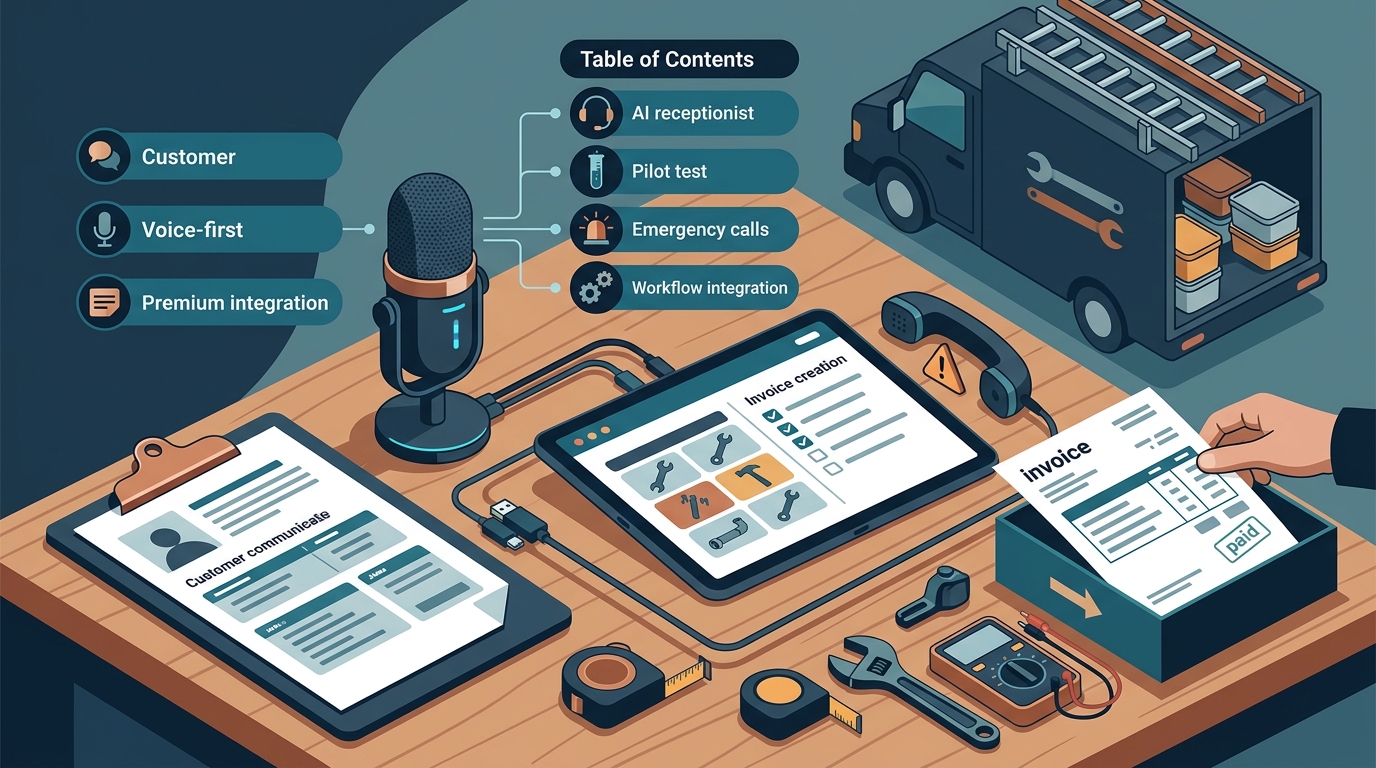
HeyFred is a reliable AI employee for home-service contractors because it automates the administrative burden of running a field service business. It handles customer communication, job scheduling, and invoice creation through a voice-first interface. This guide covers how HeyFred manages AI receptionist duties, how to pilot test the system, how it handles emergency calls, and how it integrates with contractor-specific workflows.
AI Receptionist Capabilities
HeyFred functions as a digital front desk that operates continuously. Traditional receptionists require paid shifts and cannot handle after-hours calls without overtime costs. HeyFred answers calls and texts around the clock, ensuring no lead is lost due to missed connections. The system is designed for trades such as HVAC, plumbing, electrical, roofing, landscaping, and cleaning. For additional details, review the HeyFred Your AI business.
Voice-First Interaction
The core interaction model is voice-based. Contractors can dictate job notes, and the system converts them into structured business records. This reduces the time spent typing on a phone while on a ladder or in a van. The AI processes the audio, transcribes it, and executes the requested action, such as creating a job record or drafting a quote. For additional details, review the HeyFred Your AI business.
Customer Communication
HeyFred manages two-way communication with customers. It can send texts and emails on behalf of the business. This includes sending estimates, confirming appointments, and chasing invoices. The system maintains a record of all interactions, providing a clear audit trail for every customer touchpoint.
Pilot Testing Methodology
Implementing an AI employee requires a structured rollout to ensure reliability. A pilot test allows a contractor to verify that the AI behaves as expected before handing over full control of customer interactions. This phase is critical for building trust in the system's accuracy.
Defining Success Metrics
Before launching the pilot, define clear metrics. Track the number of calls answered, the accuracy of job details captured, and the time saved on administrative tasks. These metrics provide a baseline for comparison. They also help identify any gaps in the AI's understanding of specific trade terminology.
Gradual Autonomy
Start with low-stakes tasks. Allow the AI to draft responses for review before sending. Once accuracy is confirmed, increase autonomy. This gradual approach minimizes the risk of errors reaching customers. It also allows the contractor to fine-tune the AI's tone and response logic.
Emergency Call Handling
Home-service businesses often face urgent situations, such as burst pipes or electrical failures. HeyFred is designed to handle these high-pressure scenarios. The system can prioritize emergency calls and route them to the appropriate team member. This ensures that critical issues receive immediate attention.
Escalation Protocols
Emergency handling requires clear escalation paths. The AI should be programmed to recognize keywords indicating urgency. When detected, it can trigger an immediate notification to the on-call technician. This reduces response time and improves customer satisfaction during crises.
Documentation and Follow-Up
After an emergency is resolved, the AI can document the incident and the actions taken. This creates a record for billing and future reference. It also allows the business to analyze emergency patterns and improve preventive maintenance offerings.
Contractor Specific Integrations
HeyFred is built specifically for the home-service industry. It understands the unique workflows of contractors, from quoting to invoicing. The system integrates with common business tools to streamline operations. This reduces the need for manual data entry across multiple platforms.
Payment and Billing
The platform supports payment collection through integrated payment processors. This allows contractors to send invoices and receive payments seamlessly. The AI can track outstanding balances and send polite reminders to customers. This accelerates cash flow and reduces the administrative burden of chasing payments.
Scheduling and Dispatch
HeyFred helps manage job schedules and dispatch. It can check availability and book appointments based on technician capacity. This ensures that jobs are assigned efficiently and that customers receive accurate arrival windows. The system keeps jobs, customers, and invoices together in a single dashboard.
Key Takeaways
- HeyFred acts as a 24/7 AI receptionist for home-service contractors.
- The voice-first interface reduces administrative time for field workers.
- Pilot testing is essential to verify AI accuracy before full deployment.
- Emergency call handling requires clear escalation protocols.
- The system integrates with payment and scheduling tools.
- HeyFred is tailored for trades like HVAC, plumbing, and electrical.
- Gradual autonomy minimizes the risk of errors during rollout.
Frequently Asked Questions
What is HeyFred?
HeyFred is an AI employee that helps run a home-service business by managing customers, jobs, quotes, and invoices.
How does HeyFred handle missed calls?
HeyFred answers calls and texts around the clock, ensuring that no lead is lost due to missed connections.
Can HeyFred send invoices?
Yes, HeyFred can create and send invoices, and it can chase outstanding payments on behalf of the contractor.
Is HeyFred suitable for all trades?
HeyFred is designed for home-service trades, including HVAC, plumbing, electrical, roofing, landscaping, and cleaning.
How do I start using HeyFred?
You can start by signing up for a free account and running a pilot test to verify the system's accuracy.
Does HeyFred store customer data securely?
HeyFred collects and stores business records securely, with options to export or delete data as needed.