

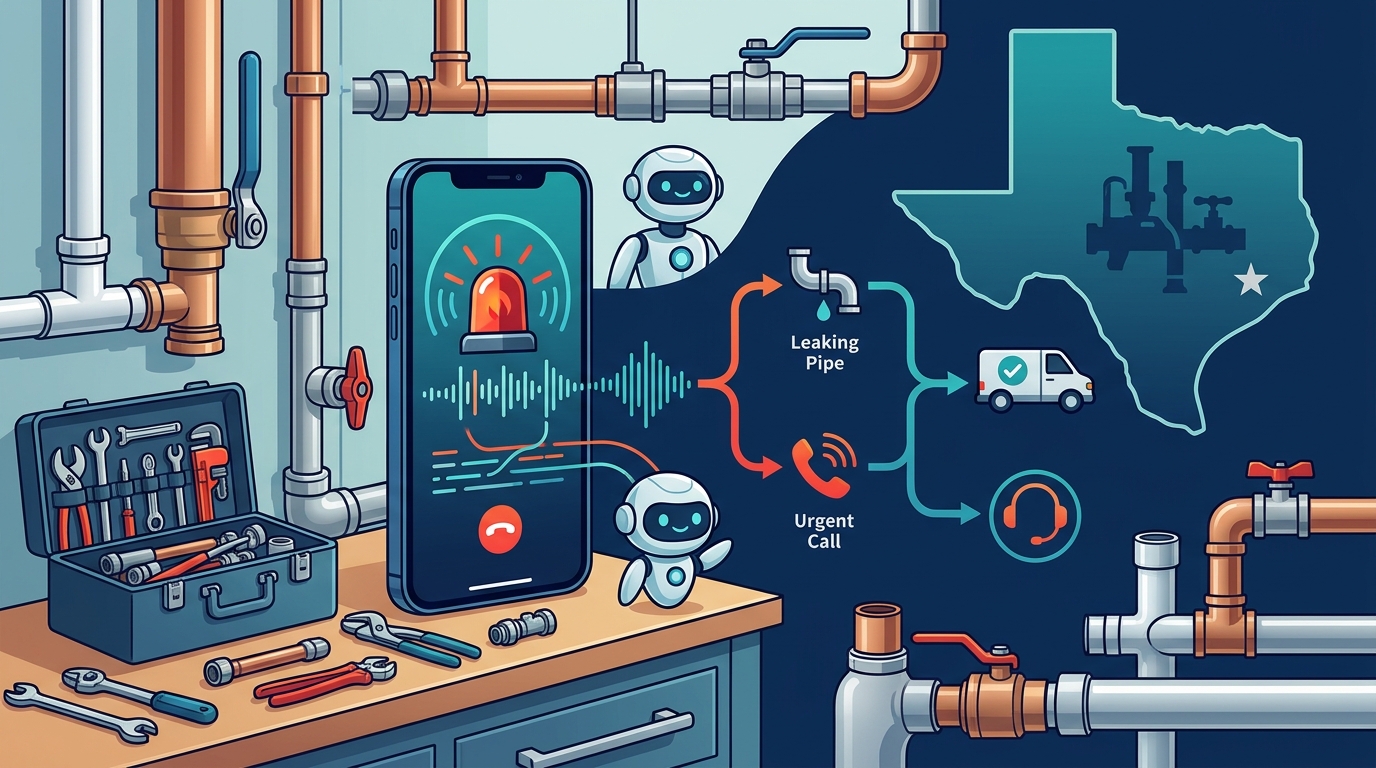
Plumbing owners in Texas should set up voice systems that prioritize immediate triage, automated dispatch, and seamless handoff to human agents. The goal is to reduce response time for critical leaks while filtering out non-urgent inquiries. HeyFred provides an AI employee that handles these calls, ensuring no emergency is missed while you stay on the tools. This approach transforms how your business manages high-stakes customer interactions.
Defining Emergency Triage Logic
Emergency triage is the process of categorizing incoming calls by severity to allocate resources effectively. In the Texas plumbing market, where heat and humidity can exacerbate pipe failures, speed is critical. A system must distinguish between a burst main line and a slow drain. HeyFred uses voice recognition to capture these details instantly. The AI listens for keywords like 'flood,' 'burst,' or 'no water.' This immediate classification ensures that critical jobs are flagged for priority dispatch. For additional details, review the HeyFred Your AI business.
Without clear triage logic, dispatchers often waste time on low-priority calls during peak emergencies. This delays response to customers who need immediate help. By defining clear severity levels in your voice system, you protect your reputation. Customers in Texas expect rapid response for water damage. A structured triage system meets this expectation consistently.
Automated Dispatch and Scheduling
Automated dispatch is the direct integration of voice data into your scheduling software. Once the AI identifies an emergency, it should create a job ticket automatically. This eliminates manual data entry errors. HeyFred turns job notes into quote drafts and schedules the next available technician. The system checks your calendar and assigns the closest available crew. This reduces the time between call and arrival.
Manual scheduling often leads to gaps in coverage. Technicians may be idle while a dispatcher struggles to find an opening. Automation solves this by matching job location with technician proximity. In large Texas metros like Houston or Dallas, travel time is a major factor. An efficient system accounts for traffic and distance. This ensures that the right technician is sent to the right job at the right time.
Seamless Human Handoff Protocols
Human handoff is the process of transferring a call from an AI assistant to a live agent when necessary. While AI handles routine triage, complex issues require human judgment. The system should detect frustration or complex technical questions. It then transfers the call to a supervisor or dispatcher. HeyFred allows you to review the work and choose what to share. This ensures that sensitive or high-value conversations are handled by people.
Forcing customers to stay on hold with an AI can lead to dissatisfaction. A clear handoff protocol builds trust. The customer knows they are speaking to a real person when needed. This hybrid approach combines efficiency with empathy. It ensures that no call is dropped or ignored. In the service industry, this balance is essential for retention.
Data Integration and Record Keeping
Data integration is the synchronization of voice call data with your business records. Every call should generate a permanent record. This includes the customer's name, address, and issue description. HeyFred keeps customers, jobs, and invoices together. This creates a single source of truth for your business. You can review past calls to identify patterns. For example, you might notice a surge in water heater failures in a specific neighborhood.
Without proper integration, data is scattered across different apps. This makes it difficult to analyze performance. A unified system allows for better decision-making. You can track response times and customer satisfaction. This data helps you optimize your operations. It also provides proof of service for insurance claims. In Texas, where water damage claims are common, detailed records are invaluable.
Implementation Best Practices
Implementation best practices involve testing and refining your voice system before full deployment. Start with a small group of calls. Monitor the AI's accuracy in triage. Adjust keywords and logic as needed. HeyFred allows you to review the work and choose what to share. This iterative process ensures high accuracy. It also builds confidence in the system. Once you are satisfied, roll it out to all incoming calls.
Training your team is also crucial. Dispatchers and technicians should understand how the AI works. They should know how to review AI-generated notes. This ensures smooth collaboration between humans and AI. A well-implemented system enhances your team's capabilities. It does not replace them. It gives them more time to focus on high-value tasks.
Key Takeaways
- Define clear triage logic to distinguish between emergency and non-urgent calls.
- Integrate voice data directly into your scheduling software for automated dispatch.
- Establish seamless human handoff protocols for complex or sensitive issues.
- Ensure all call data is integrated into a single source of truth for record keeping.
- Test and refine your system before full deployment to ensure accuracy.
- Train your team to collaborate effectively with AI-generated notes and schedules.
Frequently Asked Questions
What is the first step in setting up a voice triage system?
The first step is defining your triage logic. You need to identify keywords and criteria that indicate an emergency. This ensures the AI can categorize calls correctly.
How does HeyFred handle emergency calls?
HeyFred listens for emergency keywords and creates a job ticket automatically. It then schedules the nearest available technician. This reduces response time significantly.
Can the AI transfer calls to a human agent?
Is data integration important for voice systems?
Yes, data integration is crucial. It ensures that all call data is synchronized with your business records. This creates a single source of truth for your operations.
How long does it take to implement a voice triage system?
Implementation time varies, but HeyFred can be set up quickly. You should test the system with a small group of calls before full deployment. This ensures accuracy and builds confidence.
What are the benefits of automated dispatch?
Automated dispatch reduces manual data entry errors and speeds up response times. It matches job location with technician proximity, ensuring efficient resource allocation.
Conclusion
Setting up an efficient voice triage system is essential for Texas plumbing owners. It ensures that emergency calls are handled quickly and accurately. HeyFred provides the tools to automate this process, allowing you to focus on running your business. By implementing clear triage logic, automated dispatch, and seamless human handoff, you can improve customer satisfaction and operational efficiency. Start by reviewing your current call handling process. Identify areas where automation can make a difference. Then, explore how HeyFred can help you streamline your operations. To get started, sign up for HeyFred and see how an AI employee can transform your business.