
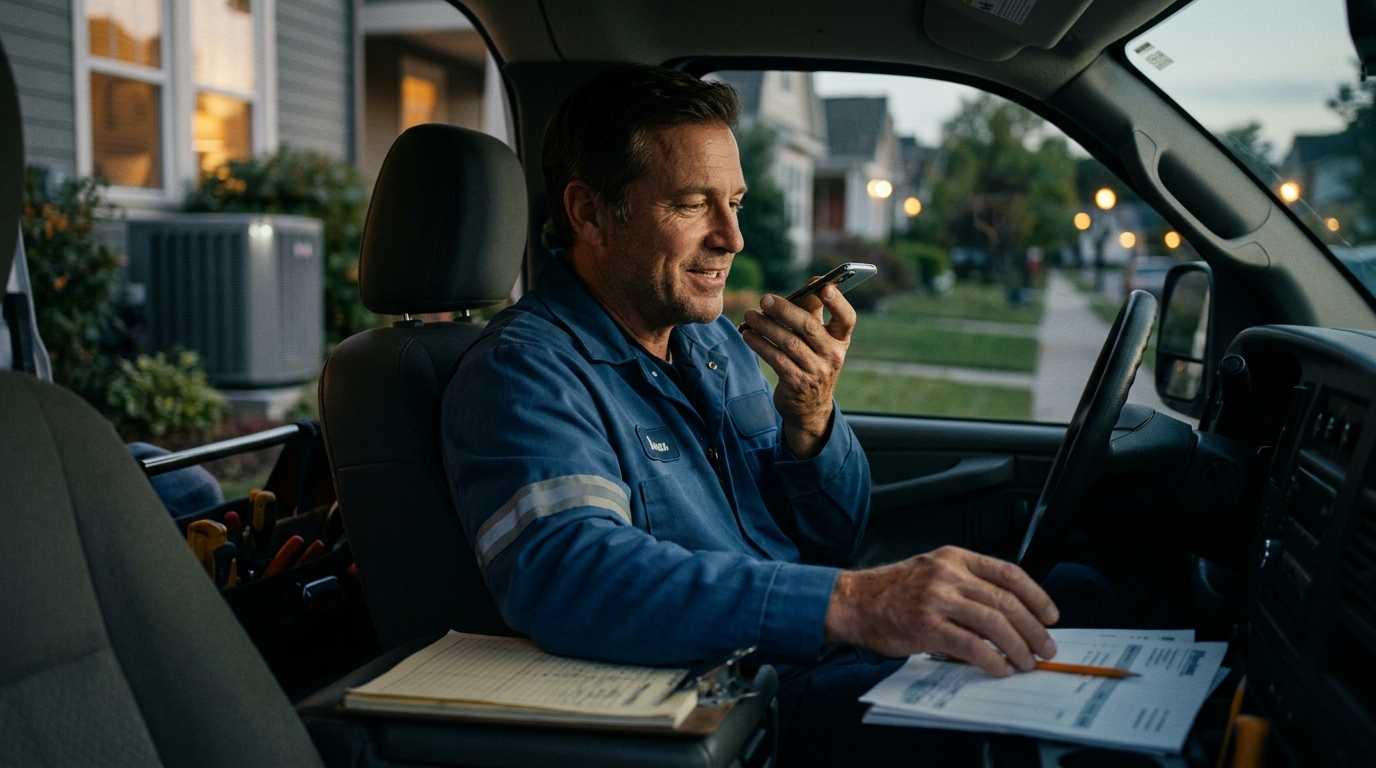
For a busy HVAC owner, voice logging helps more than manual entry because it captures job details faster and reduces transcription errors. This guide covers voice logging efficiency, manual entry errors, and structured data validation to help you choose the right workflow for your business.
Voice Logging Efficiency
Voice logging is a method where technicians speak job details into a device, and the system converts speech to text. For HVAC contractors, this approach saves significant time on-site. Instead of typing on a small screen while holding a wrench, you can dictate notes while working. This keeps your hands free and your focus on the repair. For additional details, review the HeyFred Your AI business.
Speed of Capture
Speaking is naturally faster than typing for most people. When you finish a job, you can dictate a summary in under a minute. This immediate capture ensures details are fresh in your memory. You do not have to remember what you did later in the truck or at the office. The system processes the audio and creates a text record instantly.
Hands-Free Operation
HVAC work often requires both hands. You might be adjusting a thermostat, checking a capacitor, or cleaning a coil. Voice logging allows you to document these actions without stopping your work. You can mention the specific part numbers or settings you changed. This creates a detailed audit trail without interrupting your workflow. It is a seamless way to keep records current.
Integration with Business Tools
Modern AI assistants like HeyFred integrate voice logging directly into business management. You can tell the AI what happened on the job, and it updates your records. This means the customer, job, and invoice data stay in sync. You do not have to switch between multiple apps. The voice input becomes the single source of truth for your daily operations.
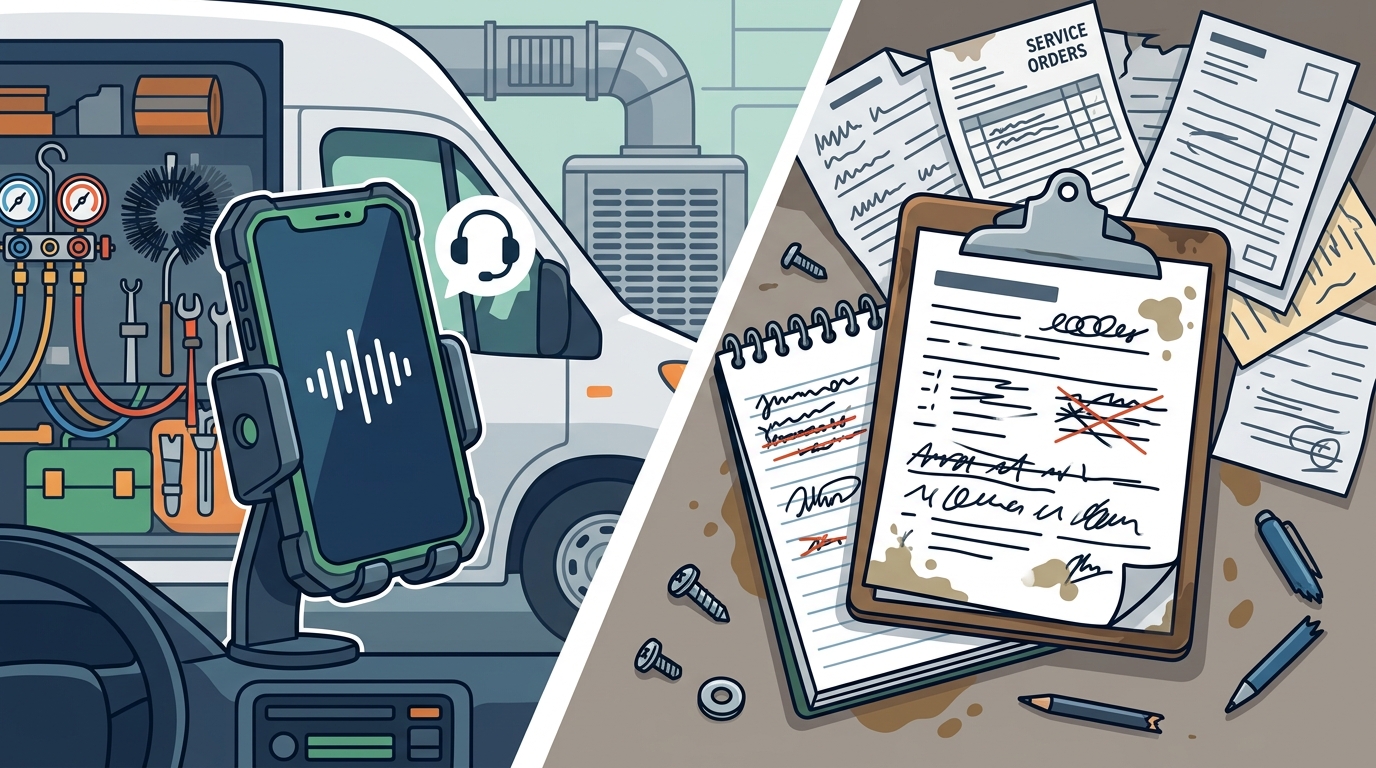
Manual Entry Errors
Manual entry is the process of typing data into a system by hand. While traditional, it is prone to human error. Fatigue, distraction, and small screens all contribute to mistakes. These errors can have serious consequences for your business and your customers.
Common Typing Mistakes
Typing on a mobile phone is difficult in the field. You might be in a tight crawl space or wearing gloves. This leads to typos in customer names, addresses, or phone numbers. A single wrong digit can send an invoice to the wrong person. It can also cause scheduling conflicts if a job address is misspelled. These small errors create administrative headaches later.
Data Inconsistency
When you type data manually, you might use different formats each time. One day you write "AC repair," and the next day "air conditioning fix." This inconsistency makes it hard to search your records. You cannot easily filter jobs by type or status. It also makes it difficult to generate accurate reports. Consistent data is essential for analyzing your business performance.
Time Cost of Corrections
Fixing manual entry errors takes time. You have to find the mistake, correct it, and verify the change. This administrative work takes you away from billable hours. It is work that does not generate revenue. By reducing errors at the point of entry, you save time and money. You can focus on serving customers instead of fixing data.
Structured Data Validation
Structured data validation is the process of ensuring that information fits a specific format before it is saved. This step is crucial for maintaining data quality. It helps prevent errors from entering your system in the first place. It also makes your data easier to use and analyze.
Automated Checks
AI-powered tools can validate data as you speak or type. For example, the system can check if a phone number has the correct number of digits. It can verify that an email address is properly formatted. It can also ensure that dates are in a standard format. These automated checks catch errors before they become problems. You get immediate feedback if something looks wrong.
Standardized Fields
Benefits for Reporting
Clean, structured data makes reporting much easier. You can generate reports on revenue by service type or by technician. You can identify which equipment brands fail most often. You can track your response times and customer satisfaction. These insights help you make better business decisions. Without structured data, this analysis is nearly impossible. It is the foundation of data-driven management.
Comparison of Voice Logging and Manual Entry
| Speed | Fast, natural pace | Slower, requires typing |
| Hands-Free | Yes, allows multitasking | No, requires holding device | Error Rate | Low with AI validation | Higher due to typos | Data Consistency | High with structured fields | Variable, depends on user | Learning Curve | Minimal, just speak | Requires typing proficiency |
| Best For | Field technicians, busy owners | Office staff, detailed notes |
Key Takeaways
- Voice logging is faster than manual entry for capturing job details.
- It allows hands-free operation, which is essential for HVAC work.
- Manual entry is prone to typos and data inconsistency.
- Structured data validation ensures accuracy and consistency.
- AI tools can automate validation and reduce errors.
- Clean data enables better reporting and business insights.
- Combining voice logging with structured validation is the most effective approach.
- It saves time and reduces administrative burden for busy owners.
Frequently Asked Questions
Is voice logging accurate enough for business records?
Yes, modern AI systems are highly accurate. They use advanced speech recognition and validation. You can review and edit the text before it is saved. This ensures accuracy while maintaining speed.
Can I use voice logging in noisy environments?
Yes, most systems are designed to filter out background noise. They focus on your voice and ignore ambient sounds. This makes them reliable in busy job sites.
Does voice logging work with all HVAC equipment?
Yes, you can dictate details about any equipment. You can mention brand, model, and serial numbers. The system will structure this data appropriately.
How does structured data validation work?
It checks data against predefined rules. For example, it verifies phone number formats. It ensures dates are valid. This prevents errors from being saved.
Can I switch between voice and manual entry?
Yes, most systems allow both methods. You can use voice for quick notes and manual entry for detailed descriptions. This flexibility suits different situations.
Is my data secure when using voice logging?
Yes, reputable providers use encryption and secure storage. Your data is protected in transit and at rest. You can review their privacy policy for details.
How long does it take to set up voice logging?
Setup is quick. You just need to download the app and sign in. You can start using it immediately. No special hardware is required.
Can I export my data from the system?
Yes, you can export your data in various formats. This ensures you are not locked in. You can move your records if you change providers.
Conclusion
For a busy HVAC owner, voice logging is the superior choice. It saves time, reduces errors, and keeps your data clean. When combined with structured data validation, it creates a powerful workflow. You can focus on your customers while the system handles the records. HeyFred offers this exact solution, helping you run your business while you work. Start using voice logging today and see the difference it makes in your daily operations.