

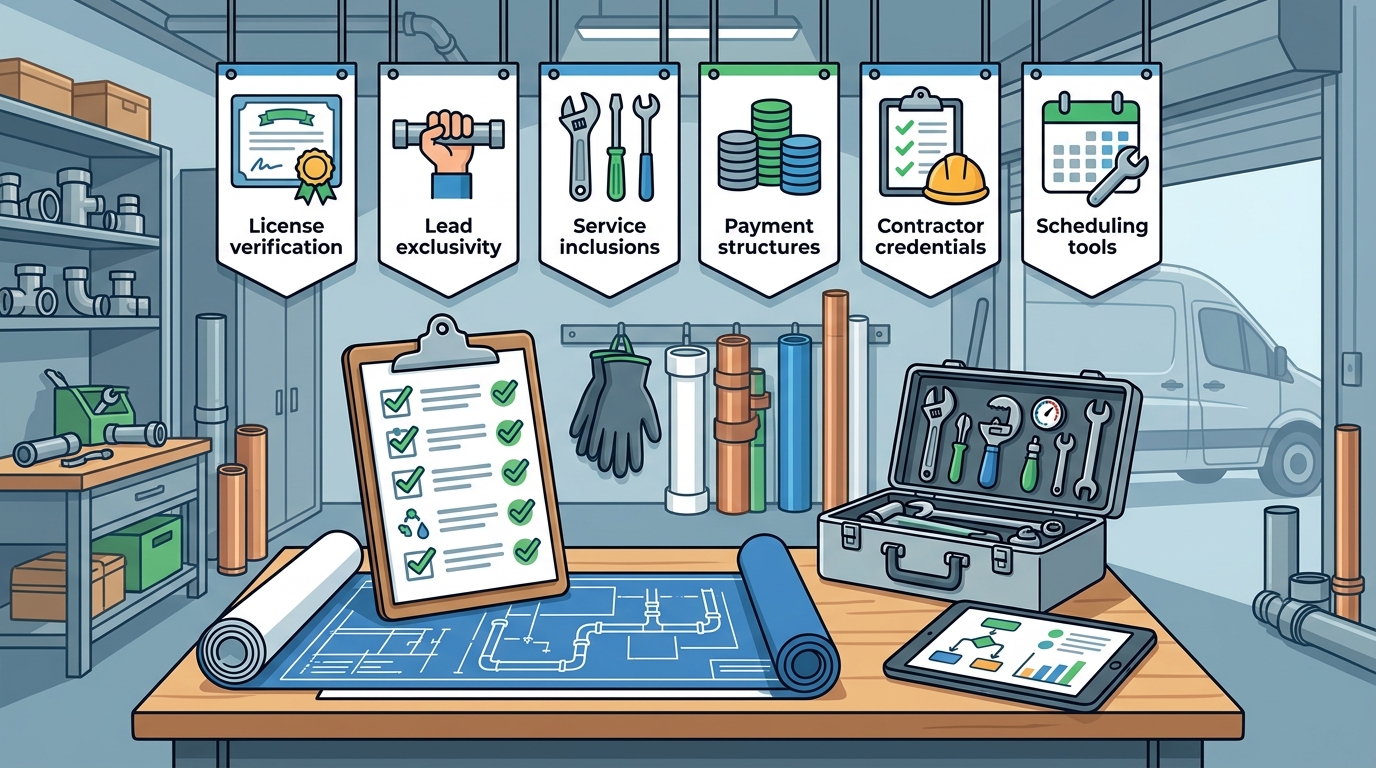
Plumbing owners must verify lead exclusivity, license verification, service inclusions, payment structures, contractor credentials, and scheduling tools before signing a platform contract. This guide details exactly what to check in each category to avoid hidden costs and operational friction. It provides a framework for evaluating contractor management software, specifically focusing on how tools like HeyFred handle these critical business functions for home-service pros.
Lead Exclusivity and Ownership
Lead exclusivity is the contractual right to be the sole provider of a specific customer lead within a defined geographic area or time window. In the plumbing industry, lead generation is often the most expensive line item. When evaluating a platform, you must determine if the leads are exclusive or shared. Shared leads are distributed to multiple contractors, which increases competition and lowers conversion rates. Exclusive leads are sold to only one provider, but they often come at a significantly higher price point. For additional details, review the Terms of Service HeyFred.
Ownership of the lead data is a separate but equally critical issue. Many platforms claim that leads belong to the platform, not the contractor. This means if you cancel your subscription, you lose access to your customer database. You should verify if the platform allows you to export your customer data in a standard format like CSV. A platform that locks your data in is a long-term liability. HeyFred positions itself as an AI employee that helps you keep customer details together, ensuring that the data remains part of your business records rather than a proprietary asset of the software vendor.
Verifying Lead Source Transparency
License Verification and Compliance
License verification is the process of confirming that a contractor holds the necessary state or local permits to perform plumbing work. Regulatory requirements vary significantly by jurisdiction. For example, a plumbing contractor license is required for plumbing work in Minnesota communities with a population over 5,000, as noted by the Minnesota Department of Labor and Industry. In other states, like Illinois, applicants must complete specific registration forms to operate legally, according to the Illinois Department of Public Health. For additional details, review the Privacy Policy HeyFred.
When choosing a platform, verify if it integrates with state licensing databases. Some platforms offer automated license verification for their marketplace of contractors. If you are a single-owner shop, you need a platform that helps you track your own license renewals and insurance certificates. The platform should allow you to upload and manage your license documents so they can be shared with customers during the quoting process. This builds trust and ensures compliance without manual paperwork. according to Verify a Contractor For additional details, review the HeyFred Your AI business.
Local Jurisdiction Nuances
Local municipalities often have additional requirements beyond state law. For instance, in New York City, licensed master plumbers must check specific project requirements during installation and modification work, as outlined by the NYC Department of Buildings. Your platform should allow you to tag jobs with specific jurisdictional requirements. This ensures that your dispatchers and technicians are aware of local code constraints before arriving on site.
Service Inclusions and Feature Depth
Feature depth is just as important as feature breadth. A platform might list