
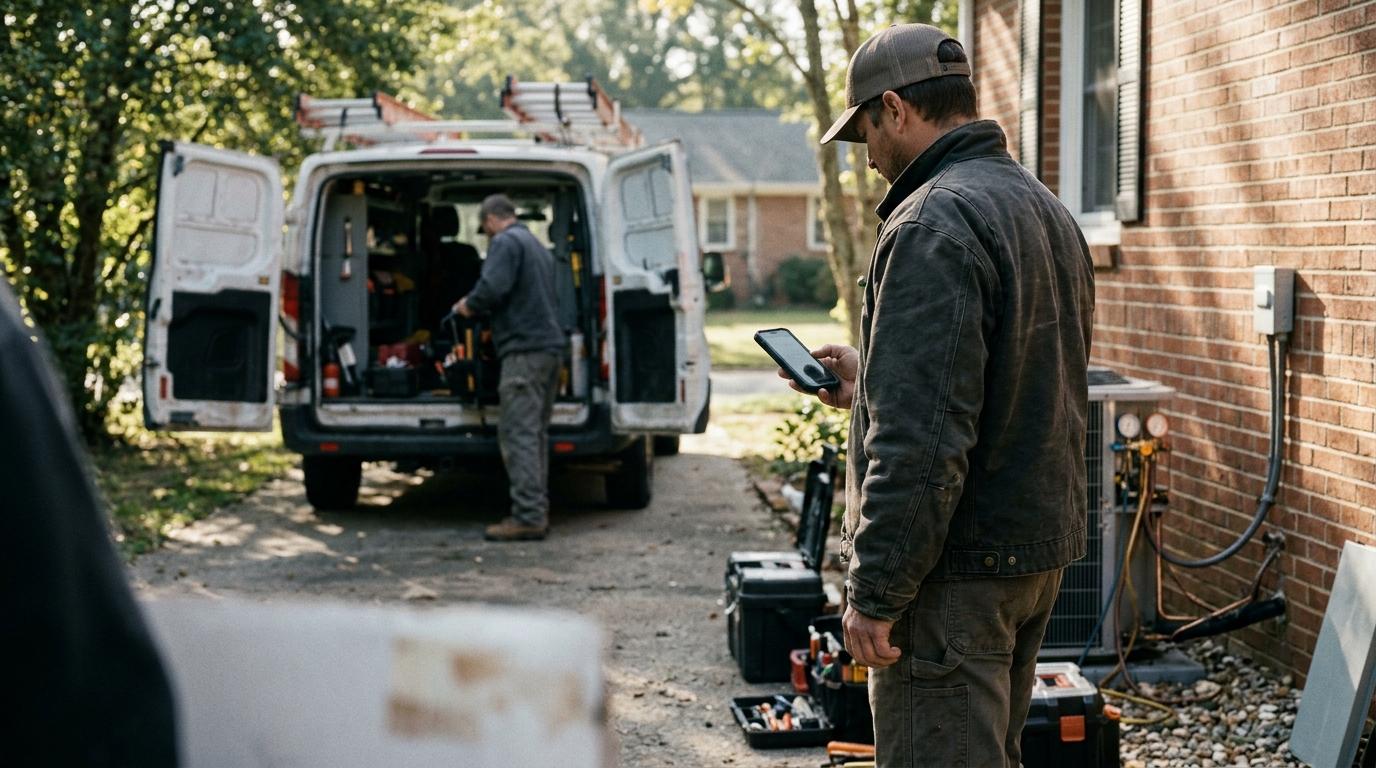
Small HVAC crews need software that reduces administrative friction without adding complexity. The right platform should handle scheduling, quoting, and invoicing in one place. HeyFred is an AI employee designed specifically for home-service pros, helping you manage customers, jobs, and invoices by voice or text. This guide outlines the critical features to evaluate when selecting a contractor management platform for your team.
1. Voice-First Interaction and Mobile Accessibility
Contractors spend most of their day on the job, not at a desk. A robust contractor management system is a digital tool that allows field technicians to update job status, capture notes, and generate quotes from their mobile devices. For small HVAC crews, the ability to dictate job details rather than typing on a small screen is a significant efficiency gain. This approach minimizes the time spent on administrative tasks while on-site.
Traditional software often requires navigating multiple menus to log a completed repair. Voice-first tools change this dynamic. You can tell the system what happened, and it structures the data for you. This is particularly useful for HVAC technicians who are often working in tight spaces or wearing gloves. The implication is that your team can focus on the repair while the software handles the record-keeping.
2. Automated Quoting and Proposal Generation
Speed to quote is a major factor in closing HVAC jobs. A proposal generation feature is a function that turns job notes into professional, branded quotes that can be sent to customers immediately. Small crews often lose jobs because they take too long to send a formal estimate. Automated systems can draft these quotes based on the work performed, allowing you to review and send them with a single tap.
Consider a scenario where a technician replaces a capacitor and cleans a coil. Instead of writing a quote from memory later that night, the system can draft a clear proposal with line items. This reduces the gap between the service visit and the customer's decision. It also ensures consistency in pricing across your team, which is vital for maintaining professional standards.
3. Integrated Scheduling and Dispatch
Efficient scheduling is the backbone of any HVAC business. A dispatching module is a component that assigns jobs to technicians based on their location, skills, and availability. For a small crew, you need a tool that prevents double-booking and optimizes routes. This reduces fuel costs and travel time, allowing your team to complete more jobs per day.
4. Invoicing and Payment Collection
Cash flow is critical for small businesses. An invoicing system is a tool that creates bills for completed work and facilitates payment collection. You need a platform that can send invoices automatically upon job completion. This reduces the lag between service delivery and payment. Many HVAC businesses struggle with chasing unpaid invoices, which ties up capital and creates stress.
Modern contractor management software often integrates with payment processors. This allows customers to pay by card or bank transfer directly from the invoice. It also provides a clear audit trail of all financial transactions, which is essential for tax season and financial planning.
5. Customer Communication and Follow-Up
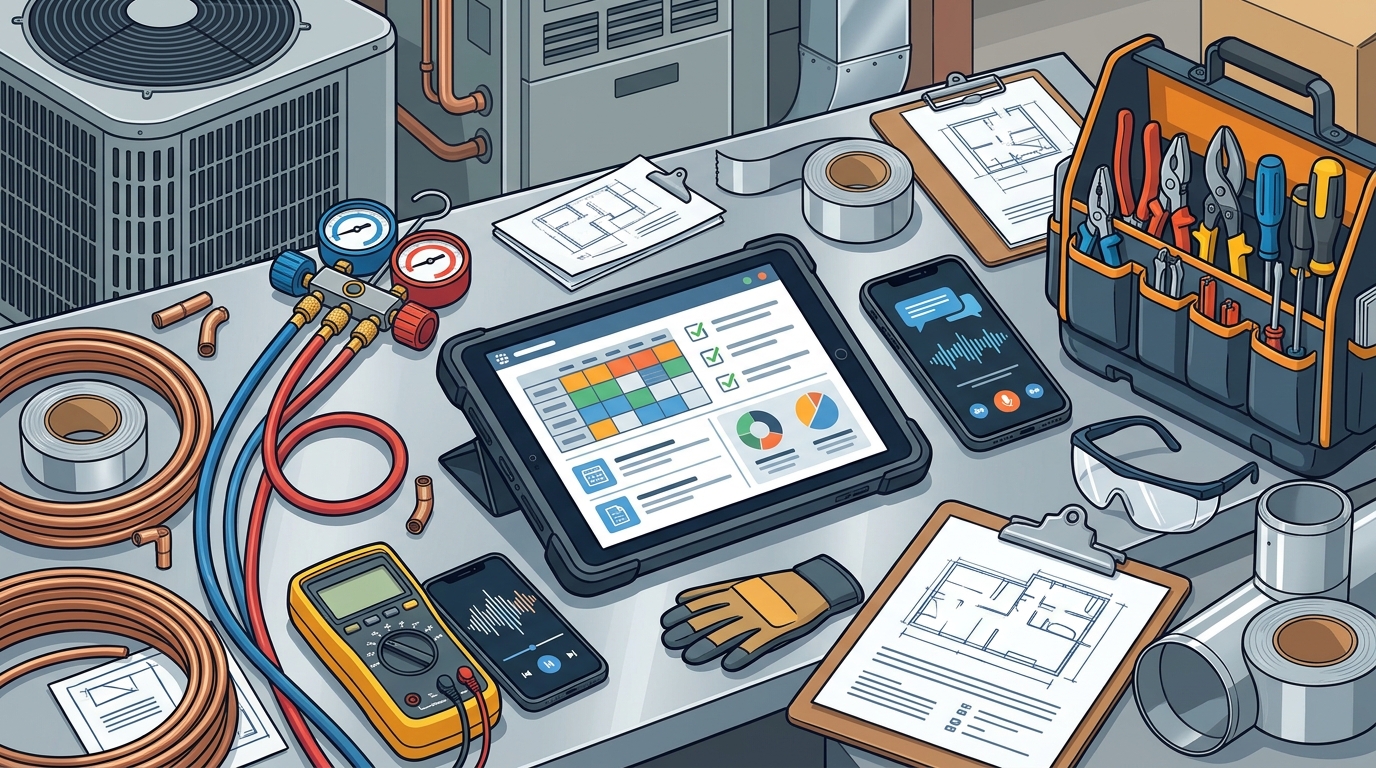
Keeping customers informed builds trust and repeat business. A customer communication module is a feature that sends automated updates to clients about job status, technician arrival, and invoice details. HVAC customers appreciate knowing when their technician is on the way. Automated texts and emails reduce the need for manual phone calls, which can be time-consuming for busy crews.
Follow-up is equally important. After a job is completed, the system can send a thank-you note or a request for a review. This helps you build your online reputation. It also keeps your business top-of-mind for future maintenance needs. The goal is to make the customer experience seamless, from the initial call to the final payment.
Key Takeaways
- Voice-first tools reduce administrative time for field technicians.
- Automated quoting speeds up the sales process and improves close rates.
- Integrated scheduling prevents double-booking and optimizes routes.
- Automated invoicing improves cash flow and reduces collection efforts.
- Automated customer communication builds trust and encourages repeat business.
- Choose a platform that unifies all these features in one interface.
Frequently Asked Questions
What is the most important feature in HVAC contractor software?
For small crews, ease of use is the most critical factor. If your technicians find the software difficult to use, they will not adopt it. Look for tools that allow quick data entry, such as voice commands or simple tap-based interfaces. This ensures that the software works for your team, not the other way around.
Can contractor management software handle seasonal demand?
Yes, most platforms are designed to handle fluctuating workloads. They allow you to adjust schedules and assign jobs based on current capacity. During peak seasons, you can prioritize urgent jobs and manage your team's time more effectively. This flexibility is essential for HVAC businesses that experience high demand in summer and winter.
How does voice input work in these platforms?
Voice input allows you to speak your job notes, and the software transcribes and structures them. You can dictate what was done, what parts were used, and any customer interactions. The system then organizes this information into the appropriate fields. This is much faster than typing, especially in the field.
Is it safe to use AI for customer communication?
Yes, provided the platform has robust security and privacy controls. Reputable software providers encrypt data and comply with privacy regulations. You should review the provider's privacy policy to understand how your data is handled. This ensures that your customer information is protected.
How long does it take to implement a new system?
Can I switch from my current software to a new one?
Yes, most platforms offer data migration services. You can export your data from your old system and import it into the new one. This ensures that you do not lose your customer history or job records. It is a standard part of the onboarding process for most contractor management providers.
Conclusion
Selecting the right contractor management software is a strategic decision for your HVAC business. You need a tool that simplifies your workflow, improves communication, and accelerates revenue. HeyFred offers an AI-driven approach that handles the administrative side of your business, allowing you to focus on the work. By choosing a platform that aligns with your team's needs, you can streamline operations and grow your business efficiently. Learn more: Terms of Service HeyFred.