
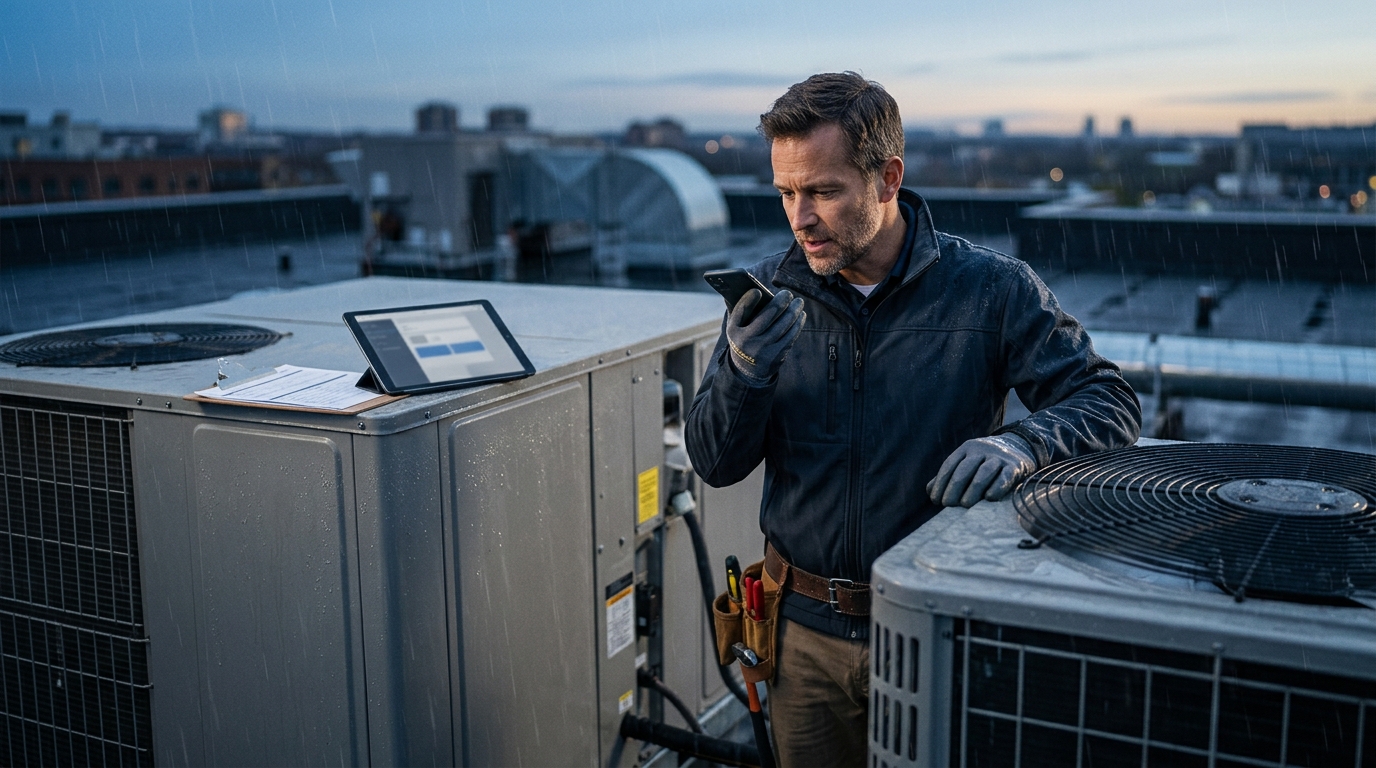
For a busy HVAC owner, voice logging helps more than manual entry because it captures job details, customer notes, and invoice data in seconds while the owner is still on-site. Manual entry requires stopping work to type into a dashboard, which delays billing and increases the chance of missing critical details. This guide explains how voice-first workflows reduce administrative friction, improve data accuracy, and allow contractors to focus on the tools rather than the paperwork. For additional details, review the Terms of Service HeyFred.
Voice Logging Speed and Efficiency
Voice logging is the process of speaking job details into a device to create structured business records without typing. For HVAC contractors, this method eliminates the need to stop work to open a laptop or type on a phone. The speed advantage is significant. A technician can dictate a summary of a completed repair, including the specific parts used and the customer's preferences, in under a minute. Manual entry for the same information often takes five to ten minutes, requiring the user to navigate through multiple screens and fields. For additional details, review the Privacy Policy HeyFred.
Reducing Administrative Friction
Administrative friction occurs when the time spent recording data outweighs the value of the work performed. In the HVAC industry, where technicians move between jobs throughout the day, this friction is a major productivity killer. Voice-first tools allow the owner or technician to capture data in real-time. This means that by the time the truck is back at the shop, the job is already logged, the invoice is drafted, and the customer has been notified. This immediacy prevents the backlog of unprocessed jobs that often accumulates at the end of the week. according to 60 Million Fewer For additional details, review the HeyFred Your AI business.
The Impact on Daily Operations
When administrative tasks are streamlined, the entire operation runs smoother. Owners no longer need to spend their evenings catching up on data entry. Instead, they can review the day's work in a few minutes. This shift allows for better planning the next day. It also ensures that customer communication is timely, which is a key driver of satisfaction and repeat business. The core benefit is that the business moves at the speed of the work, not the speed of the keyboard.
Data Accuracy and Error Reduction
Data accuracy is the degree to which recorded information matches the actual events of a job. Manual entry is prone to human error, such as typos, missed fields, or incorrect pricing. Voice logging reduces these errors by allowing the user to speak naturally. The system then structures the information into the correct fields. While no system is perfect, voice capture often results in more complete records because the user is less likely to skip a step when speaking than when typing. This completeness is crucial for accurate billing and proper job history.
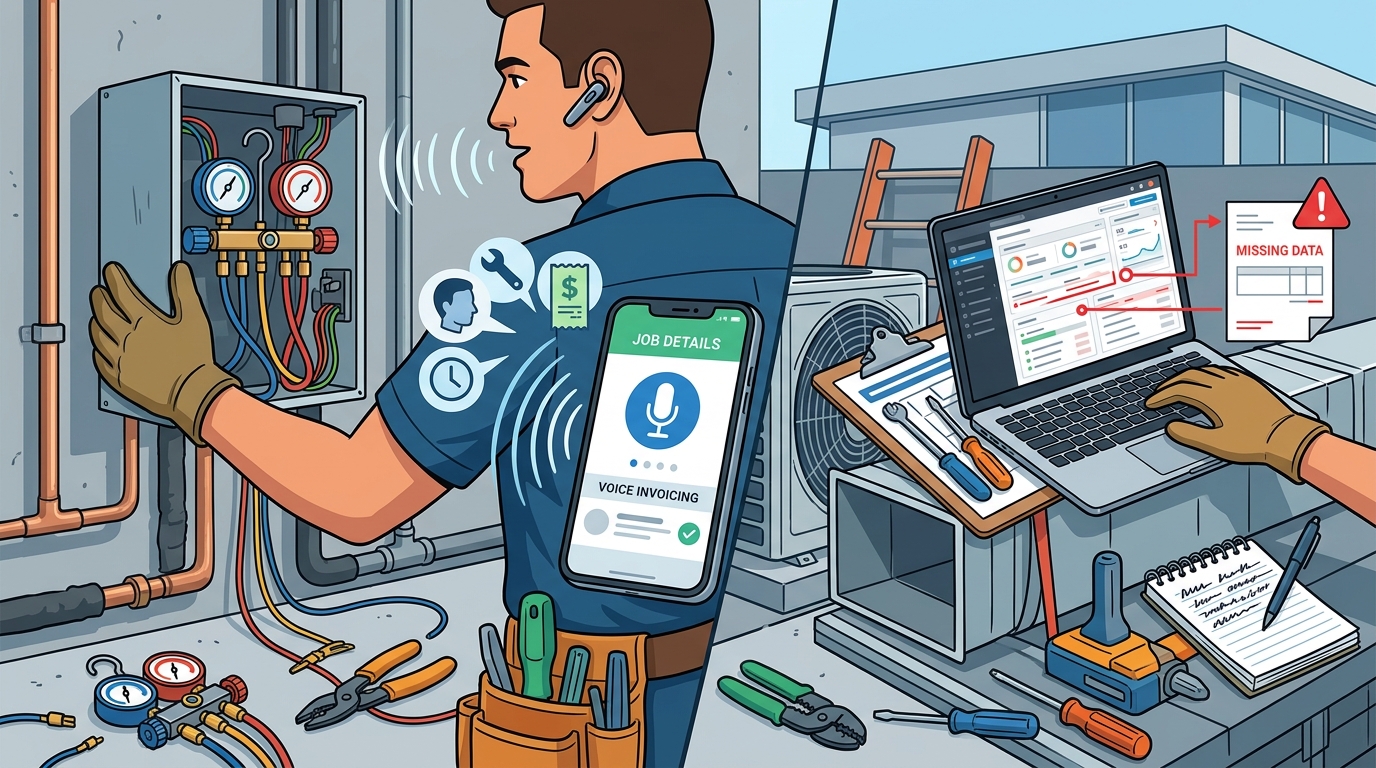
Common Manual Entry Errors
Common errors in manual entry include incorrect customer names, wrong job addresses, and missing notes about the work performed. These errors can lead to failed deliveries, billing disputes, and a lack of context for future service calls. For example, if a technician forgets to note that a customer has a dog, the next visit might be unpleasant. Voice logging encourages the user to mention these details as part of the natural flow of the summary. This holistic capture of information creates a richer and more accurate record than a series of isolated data fields.
Review and Correction
Even with voice logging, a review step is essential. The user should listen to or read the transcribed text to ensure accuracy before finalizing the record. This quick review takes only a few seconds and catches any misinterpretations by the system. By combining the speed of voice with the precision of a quick review, HVAC owners can achieve a high level of data integrity. This balance is what makes voice-first workflows superior to purely manual or purely automated systems.
Workflow Integration for HVAC Pros
Workflow integration is the seamless connection between job execution and business administration. For HVAC companies, this means that the data captured on-site flows directly into the scheduling, invoicing, and customer communication systems. A well-integrated workflow ensures that no information is lost between the field and the office. Voice-first tools are designed to integrate with existing business processes. They turn raw voice notes into structured data that can be used for quotes, invoices, and follow-up messages. This integration is what transforms a simple voice recorder into a powerful business tool.
From Job Notes to Invoices
The transition from job notes to invoices is a critical step in the HVAC business. With voice logging, the technician can dictate the work performed and the parts used. The system then generates a draft invoice based on this information. The owner can review this draft, make any necessary adjustments, and send it to the customer. This process is much faster than manually creating an invoice from scratch. It also reduces the chance of billing errors, as the invoice is based on the actual work performed and documented in real-time.
Customer Communication
Effective customer communication is a key differentiator for HVAC companies. Voice-first tools can help by automating some of the communication. For example, after a job is logged, the system can send a text message to the customer confirming the work performed and the invoice amount. This keeps the customer informed and reduces the number of calls the office has to handle. It also creates a record of the communication, which can be useful in case of any disputes. By integrating voice logging with customer communication, HVAC owners can provide a more professional and responsive service.
Voice vs Manual Entry Comparison
The following table summarizes the key differences between voice logging and manual entry for HVAC owners. This comparison highlights the advantages of voice-first workflows in terms of speed, accuracy, and workflow integration.
| Time to Log a Job | Under 1 minute | 5-10 minutes |
| Error Rate | Low (with review) | Higher (typos, missed fields) | Workflow Integration | Seamless (quotes, invoices, texts) | Manual (requires multiple steps) | Customer Communication | Automated (texts, emails) | Manual (requires office staff) |
| Focus | On the tools | On the paperwork |
Key Takeaways
- Voice logging is faster than manual entry, allowing HVAC owners to log jobs in under a minute.
- Voice logging reduces data errors by capturing information in a natural, holistic way.
- Voice-first tools integrate seamlessly with scheduling, invoicing, and customer communication systems.
- Manual entry is prone to typos and missed fields, which can lead to billing disputes and customer dissatisfaction.
- Voice logging allows HVAC owners to focus on the tools rather than the paperwork.
- A quick review step is essential to ensure the accuracy of voice-logged data.
- Voice-first workflows improve customer communication by enabling timely and automated updates.
- The time saved by voice logging can be used for more productive activities, such as marketing and training. according to 60 Million Fewer
Frequently Asked Questions
Is voice logging accurate enough for billing?
Yes, voice logging is accurate enough for billing when combined with a quick review step. The system structures the spoken information into the correct fields, and the user can verify the details before finalizing the invoice. This process ensures that the billing is based on the actual work performed.
Can I use voice logging on my phone?
Yes, most voice-first tools are designed to work on mobile devices. This allows HVAC owners and technicians to log jobs from the field, without needing a laptop. The mobile app captures the voice notes and syncs them with the business management system.
What happens if the system misinterprets a word?
If the system misinterprets a word, the user can correct it during the review step. The system usually provides a transcript that can be edited. This ensures that the final record is accurate, even if the initial transcription was not perfect.
Does voice logging work for all HVAC services?
Yes, voice logging works for all HVAC services, from simple maintenance to complex repairs. The system can capture details about the work performed, the parts used, and the customer's preferences. This makes it a versatile tool for any HVAC company.
How does voice logging improve customer communication?
Voice logging improves customer communication by enabling timely and automated updates. After a job is logged, the system can send a text message to the customer confirming the work performed and the invoice amount. This keeps the customer informed and reduces the number of calls the office has to handle.
Is voice logging secure?
Can I use voice logging with my existing software?
It depends on the specific tool. Some voice-first tools integrate with existing business management software, while others are standalone. It is important to choose a tool that integrates with your existing systems to ensure a seamless workflow.
How much time can I save with voice logging?
You can save several hours per week with voice logging. The time saved depends on the number of jobs you log and the complexity of the work. However, even a small reduction in administrative time can have a significant impact on your productivity.
Is voice logging suitable for small HVAC companies?
Yes, voice logging is suitable for small HVAC companies. In fact, it is particularly beneficial for small companies, where the owner is often involved in both the field and the office. Voice logging allows the owner to manage the business more efficiently, without needing to hire additional administrative staff.
What are the limitations of voice logging?
The main limitation of voice logging is that it requires a review step to ensure accuracy. The user must listen to or read the transcribed text to catch any misinterpretations. However, this step takes only a few seconds and is a small price to pay for the speed and convenience of voice logging.
Conclusion
For a busy HVAC owner, voice logging is the clear winner over manual entry. It is faster, more accurate, and integrates seamlessly with the rest of the business. By adopting a voice-first workflow, HVAC owners can reduce administrative friction, improve data accuracy, and focus on the tools rather than the paperwork. HeyFred is an AI employee that helps run your business while you work. It turns job notes into quote drafts, offers clear packages, and keeps customers, jobs, and invoices together. To plan your visit, start free and see how it works.